How a founder-led brand generated almost $3M, profitably, and grew repeat revenue from a product people don't usually reorder.
Comfort Truss sells a hernia belt. You would think people buy it once and that's it. But almost half of their revenue comes from customers who come back.
For close to three years we have run their Paid Advertising, and lately their email too, to bring people in and get them to come back.
Where they started
When we started in 2023, the hardest part was getting noticed. A lot of people who could use a hernia belt are not looking for one, so the job is to reach them and show them it can help.
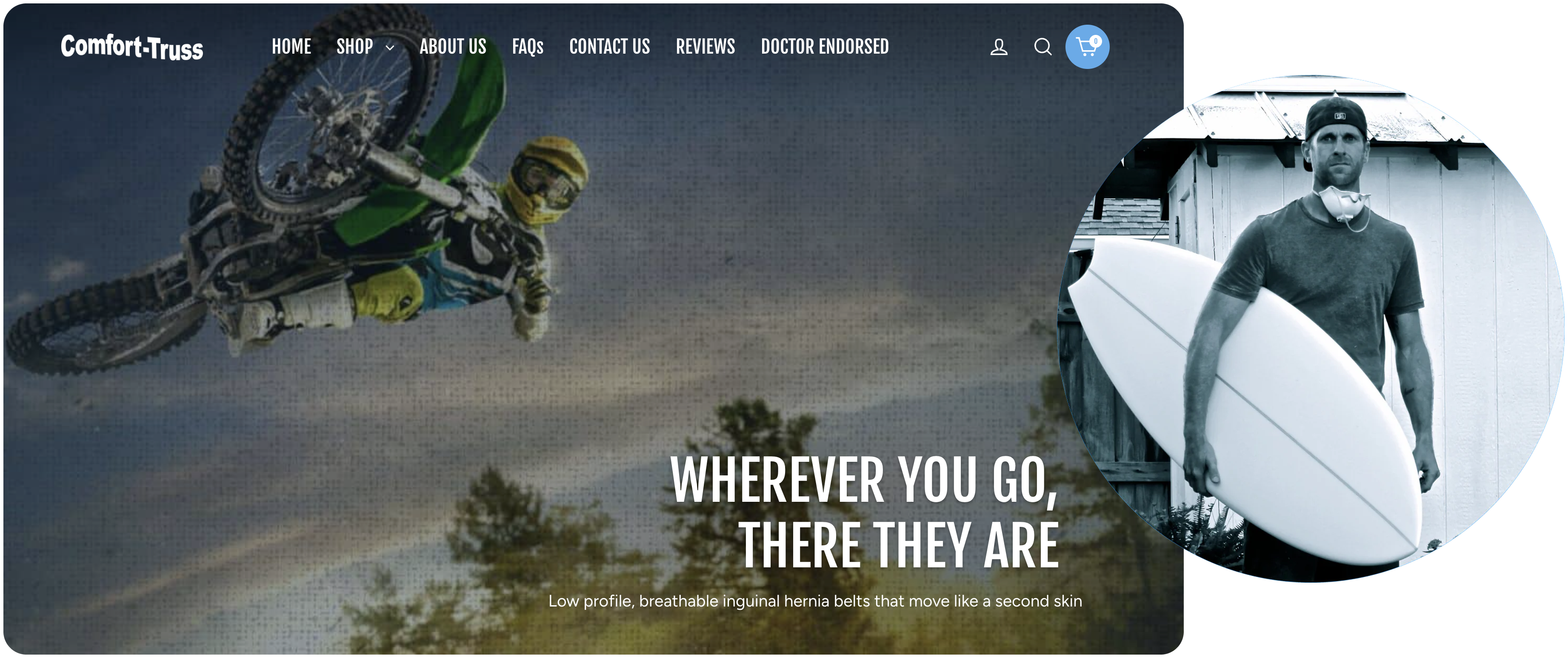
- It is a founder-led brand. George, the founder, puts his own face and story behind it.
- The customers are getting ready for surgery, recovering from surgery, or managing a hernia without it.
- At the start we focused on Paid Advertising on Meta and Google. Email came later.
Paid Advertising: the engine that carried the brand
For close to three years, Paid Advertising has been the engine. It brought new customers in and kept the brand growing, and it stayed profitable even as digital marketing kept changing.
- Founder-led creative. The ads that worked best were George telling his own story. When the founder shows his face and shares his story, people trust the brand more.
- Meta and Google. We ran Meta and Google as one connected system, so the two worked in synergy.
- A new channel when things changed. When AI Overviews started taking organic traffic away from a lot of stores, we added Microsoft Ads in early 2026 to make up for part of what was lost.
- Profitable the whole time. The goal stayed the same: keep sales steady and the business profitable.
The result: almost $3M in revenue, profitably, over close to three years.
Then we added email
The brand was already profitable on Paid Advertising. Up to that point, Paid Advertising was even doing the retention work, by spending part of the budget on people who had already bought. Email was the next step: a way to bring those customers back without paying for an ad each time.
- A large but cold list. Comfort Truss had a big email list, but it had gone completely cold. So the first job was a re-engagement effort to warm it back up, and that took several weeks.
- Real segmentation. Once the list started waking up, we finally had the data to split it into the right groups and send the right message to the right people.
- Flows and campaigns. We built the automated flows that follow up at key moments, like after a sign-up or an abandoned cart, and ran regular campaigns to those segments.
The early work on the cold list and the first emails gave a big lift to the overall return on ad spend (the MER), which then settled and held steady.
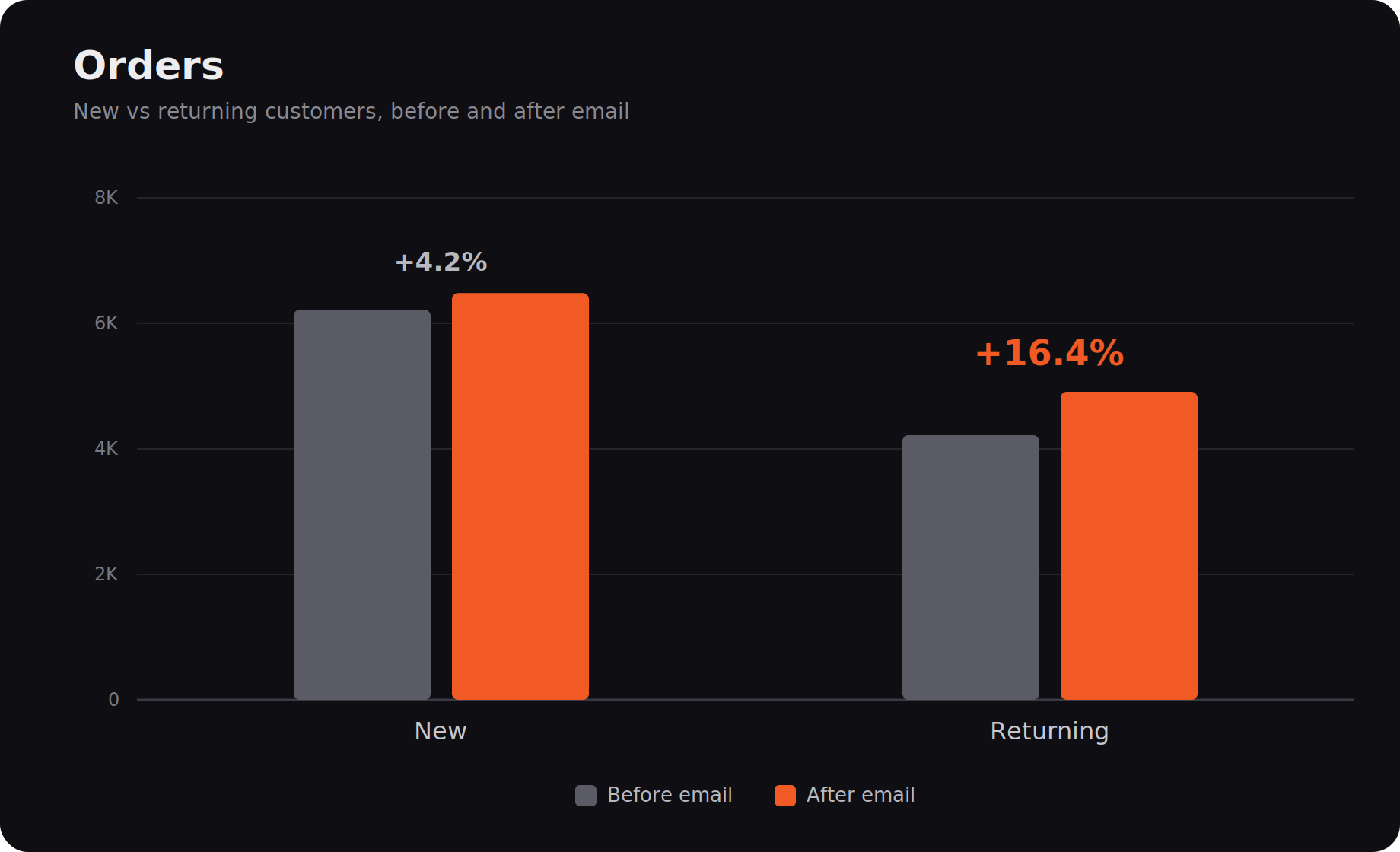
After email came in, the repeat side grew faster than the rest of the business. Orders from returning customers grew 16.3%, while total orders grew 9.1%. The share of orders from people who came back went from 40.4% to 43.1%.
Today, email does both jobs, acquisition and retention, and it is a core part of the marketing system. It is what has helped grow the repeat revenue, thanks to the way we frame the message.
Even a buy-once product has repeat revenue
Comfort Truss looks like something people buy once. The numbers say something different. Close to 44% of their revenue comes from customers who come back, often to replace a belt that has worn out.
- Almost half the revenue already comes from returning customers
- Email has a significant impact on getting those customers to come back, with no extra ad cost
- We cut the discount for returning customers from 20% to 10%, which made that part of the business more profitable
- The same idea that works for products people reorder works here too
For a brand like this, the customers who come back are where a lot of the profit is. Few brands ever go looking for them.
Want to see the same system on your brand?
Get a free audit of your repeat revenue system. We'll show you where revenue is leaking and where your next year of growth could come from.
PARTNER WITH US →